
A Past-Client Follow-Up Plan With 12 Meaningful Touches
Use this month-by-month calendar to stay in touch with past clients through 12 thoughtful touches, ready-to-use scripts, and the right mix of automation and personal outreach.
By Rajwinder Mahal
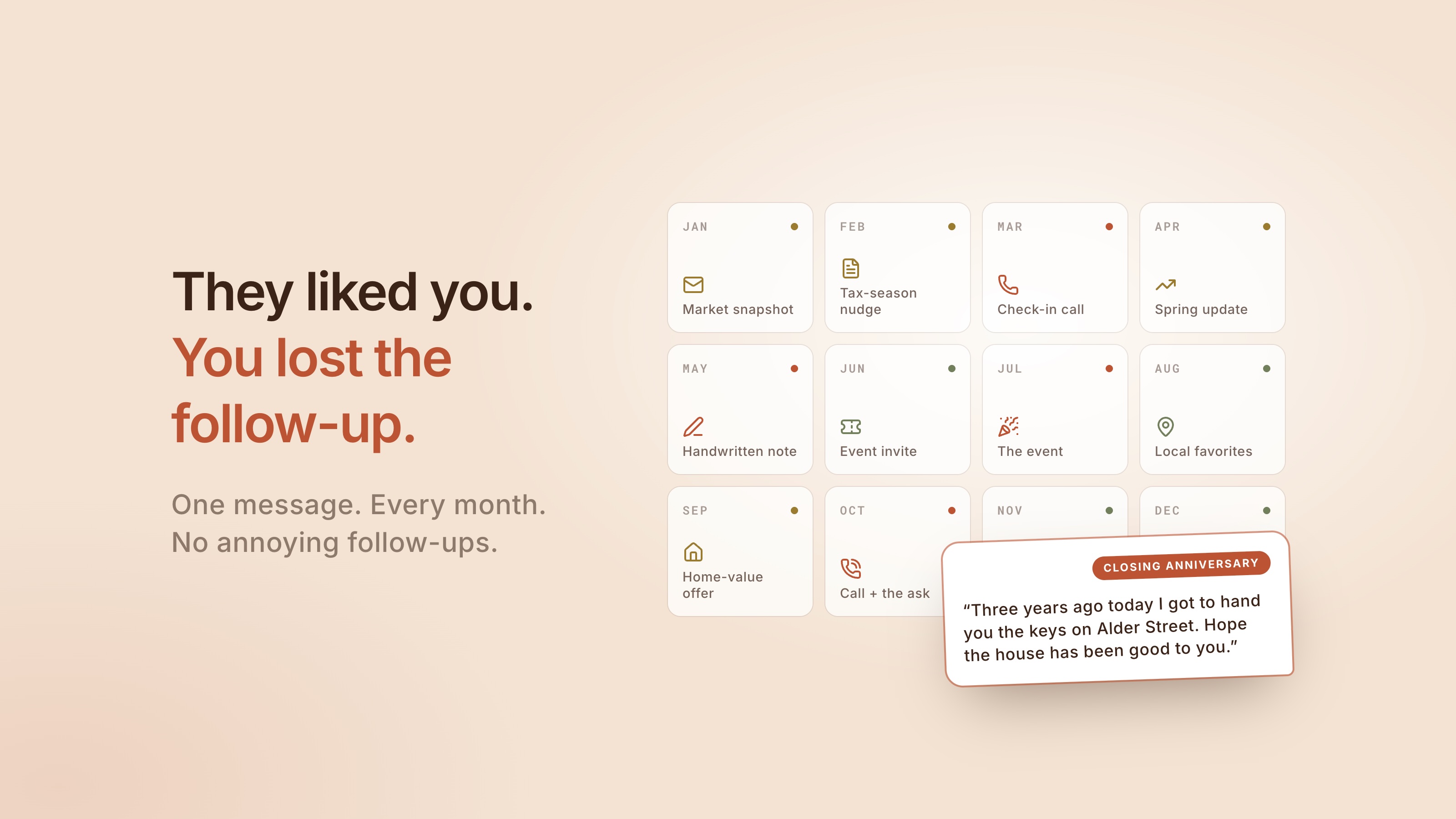
A reliable past-client follow-up plan should answer one question before the year gets busy: when will you reach out, and why? This 12-touch calendar combines four personal touches, four useful updates, three seasonal messages, and one in-person event. Set the schedule once, then personalize it by client tier. You will always know what comes next without making every interaction feel automated.
Why do past clients hire someone else the second time?
Often, it is not because you disappointed them. It is because you disappeared from their view. In the NAR 2025 Profile of Home Buyers and Sellers, 91% of buyers said they would use their agent again or recommend them, yet only 15% of buyers used an agent they had worked with before. Even among repeat buyers, just 18% returned to a previous agent. Sellers returned at a rate of 29%. The intent is strong, but it fades during the years between transactions.
The gap is often a memory problem. Years can pass between closing and the next move. During that time, clients meet other agents at open houses, community events, and dinner parties. When they need help again, the agent they meant to call may be a name they cannot quite retrieve. Meanwhile, 74% of buyers interview exactly one agent, so staying familiar can improve your chances of getting that conversation. Follow-up is less about constant marketing than staying meaningfully present. It is also central to a strong referral system: the same touches that encourage past clients to return can make it easier for them to recommend you.
What counts as a touch?
Anything the recipient experiences as personal or useful counts. A call where you ask about their kitchen renovation counts. A market snapshot for their neighborhood counts. A "thinking of you because your closing was three years ago today" text counts. A generic "just checking in!" email blast does little to strengthen the relationship.
Use this practical test: could the message have gone to anyone? If so, it is part of the background layer. Newsletters and market updates can still be useful, but they should not carry the whole plan. The 12-touch calendar deliberately mixes three types of outreach: personal (one-to-one and tied to the client's life), useful (relevant information that can go to a group), and seasonal (light, warm, and timely). The mix matters. An all-personal plan is hard to sustain, while an all-broadcast plan feels like a newsletter subscription rather than a relationship.
What does the 12-touch calendar look like?
Here's a version that spreads effort realistically across the year — anchor months are fixed, personal touches float to each contact's own dates:
| Month | Touch | Channel | Grade |
|---|---|---|---|
| January | New-year market snapshot for their neighborhood | Useful | |
| February | Tax-season nudge: "need your closing statement?" | Email or text | Useful |
| March | Check-in call #1 — house, family, no agenda | Phone | Personal |
| April | Spring market update: what homes like theirs are selling for | Useful | |
| May | Handwritten note — congratulate, remember, or just appreciate | Cards | Personal |
| June | Client appreciation event invitation | Text + mail | Seasonal |
| July | The event itself (or a summer hello if they couldn't make it) | In person | Personal |
| August | Local favorites: your genuinely useful neighborhood picks | Seasonal | |
| September | Fall market update + "your home's likely value" offer | Useful | |
| October | Check-in call #2 — and the one deliberate referral mention | Phone | Personal |
| November | Gratitude note — Thanksgiving-season thank-you | Cards | Seasonal |
| December | Year-end card + a look ahead at the coming year | Seasonal |
Floating (replaces or supplements that month's touch): the closing anniversary, one of the most personal touches because it is a date you share with the client, plus birthdays when you have them.
Two details make this calendar more useful. First, the February tax touch solves a practical problem: past clients may need their settlement statement and may not know where to find it. Tax season is also a useful checkpoint for your own books; the agent tax deductions checklist can help. Second, the October call includes the year's one planned referral mention. One well-timed mention feels natural. Bringing up referrals in every conversation does not.
What do you actually say?
Keep every script short enough that the reply is effortless. Three you can steal:
The closing anniversary (text):
"Three years ago today I got to hand you the keys on Alder Street — still one of my favorite closings. Hope the house has been good to you. If you ever want a read on what it's worth now, say the word."
The check-in call opener (phone):
"No agenda — you crossed my mind and I realized it's been too long. How's the house treating you? How did [the kitchen / the twins / the new job] turn out?"
The market update (email, 4 sentences max):
"Quick one: three homes sold within a few blocks of you this quarter, and the numbers surprised me — happy to send details. Values in [neighborhood] are holding up better than the headlines suggest. If a refresh on your home's value would ever be useful, it takes me ten minutes and there's no agenda attached. Hope all's well over on [street]!"
Replace the example details with current, verifiable information from the client's market. A personal message loses trust quickly when the local numbers are generic or outdated.
The referral mention, when it comes (October, or any moment a client thanks you), is one sentence: "That genuinely means a lot — most of my business comes from people my past clients send my way, so if anyone you know starts talking about moving, I'd love to be the name you give them." Use that wording only if it is true for your business, then move on. The review request scripts include a closing-day version and show how to pair it with a review request.
How do you segment your database?
Use three tiers based on the strength of each relationship and the time you can realistically give it:
- A - Advocates. Past clients and sphere members who have already referred you or have clearly expressed a willingness to do so. NAR found that 62% of buyers recommended their agent within the first year, so this group may be larger than you expect. They get the full 12 touches, including every personal one.
- B - Warm. Past clients and sphere contacts you know but who haven't sent business. Full calendar, but the personal touches can flex — one call instead of two, notes on years you have capacity.
- C - Everyone else. Leads that went quiet, acquaintances, the accumulated long tail. Broadcast layer only: market updates, newsletter, holiday card. No guilt.
The tiers protect your personal touches from getting diluted. Forty A-contacts handled thoughtfully can be more valuable than four hundred contacts receiving the same generic message. Move C-contacts to B when they begin engaging personally. Professional referral sources, including out-of-market agents who send you clients, deserve a separate lane on a similar cadence; that playbook is in agent-to-agent referrals.
What should you automate vs. personalize?
Automate the memory; personalize the moment. The machine's job is to know that the Hendersons' anniversary is Tuesday, that you haven't spoken to a B-tier contact in five months, and that the spring market email should go out this week — and to put a draft in front of you. Your job is the thirty seconds that makes it true: the detail about the kitchen, the street name, the reply in your voice.
In practice, the split looks like this: automate reminders and task creation for dated touches, market updates and newsletter sends, and long-term nurture for the C tier. Always personalize both calls, handwritten notes, the anniversary message, and anything responding to a major life event. Sensitive moments call for individual judgment, not a scheduled template.
This is the division of labor AgentsCard's Referral Engine, currently on the waitlist, is built to support: sorting your sphere by last touch, setting date-based reminders, and preparing drafts for you to personalize before anything sends. Whatever tool you use, the standard is the same. Each personal message should sound like it could only have come from you, and clients who trust you should not go a year without hearing from you.